
STD Testing as a Couple: Should You Go Together or Separately?
Bringing up STD testing with a partner can feel awkward, even in the most solid relationships. There is often that split-second worry about how the conversation will land. Will it seem like you do not trust them? Are they going to read too much into it? The truth is, getting tested is one of the most straightforward acts of care you can do for yourself and the person you are with. The bigger question many couples find themselves asking is not whether to get tested, but how: together in the same appointment, or separately?
Both options are completely valid, and the right choice really depends on your relationship, your comfort levels, and what each of you needs to feel at ease.
Here is a look at what to consider either way.
Why STD Screening Matters for Couples
Before diving into the together-or-separately debate, it is worth acknowledging why routine STD screening is recommended at all, even for people in committed relationships.
Many sexually transmitted infections do not cause obvious symptoms. Chlamydia, gonorrhoea, and even HIV can be present in the body for months or years without any noticeable signs. That means a person can unknowingly carry an infection from a previous relationship and pass it on without either partner realising. Regular screening catches these things early, when treatment is most effective and the risk of further transmission is lowest.
Singapore’s Ministry of Health reported 202 new HIV cases among residents in 2022, with over half diagnosed at a late stage of infection: a clear reminder of why early, routine testing matters. Among people in Singapore getting tested for STDs, many are simply being proactive rather than responding to symptoms, which is exactly the right approach.
Getting tested is not an accusation. It is responsible healthcare.
Going Together: The Case for a Shared Appointment
For many couples, going to the clinic together feels like the most natural choice. It frames testing as a team effort rather than something secretive or shameful, and it can actually strengthen trust between partners.
Here are some reasons couples choose to go together:
- It normalises the conversation. When you both walk in and walk out together, testing becomes a routine health check rather than a charged event.
- It keeps you accountable. It is easy to keep putting off an appointment when it is just on your own to-do list. Having a shared booking makes it far more likely both of you will actually follow through.
- You can discuss results together. If anything does come back positive, you are already in the same space to ask questions, hear information from the doctor at the same time, and figure out next steps as a unit.
- It can open up broader conversations. Sometimes the visit itself prompts a more honest conversation about sexual health history, past partners, or testing frequency that might not have happened otherwise.
That said, going together does not mean sitting in on each other’s consultations. Most clinics will still see each person individually for the actual examination and discussion with the doctor. This is important because everyone deserves private time with their healthcare provider to ask questions they might not want to raise in front of their partner.
Going Separately: When It Makes More Sense
There is absolutely nothing wrong with choosing to get tested on your own, and for some people, it is genuinely the better option.
You might prefer to go separately if:
- You want space to be fully honest with your doctor about your sexual history, including things you have not yet discussed with your partner.
- You feel more comfortable asking questions privately, without worrying about how your partner might react.
- Your schedules simply do not align and waiting means delaying testing unnecessarily.
- One partner is more anxious about the process and does not want the added pressure of managing the other’s reactions at the same time.
Going separately is not a sign of dishonesty or distance in a relationship. In fact, it can be an act of personal responsibility as you are taking ownership of your own health without making it contingent on another person’s schedule or readiness.
The key thing, whether you go together or apart, is that both of you actually go.
Talking About It Beforehand
However you decide to handle the logistics, having an open conversation about testing before either of you books an appointment is worth doing. It does not need to be a long or heavy discussion. Something as simple as “I think we should both get tested. Can we sort this out together or separately?” is enough to get the ball rolling.
If your partner seems hesitant or defensive, try framing it as something you are doing for both of your peace of mind rather than as a reaction to anything they have done. Most people, when they feel like they are being included rather than accused, come around fairly quickly.
It can also help to agree on what you will do with the results beforehand. Will you share them with each other? What happens if one of you comes back positive? Having that conversation in advance, when things are calm, makes it far easier to handle whatever comes up.
What to Expect at the Appointment
Whether you go alone or as a pair, knowing what the appointment involves can take some of the anxiety out of it.
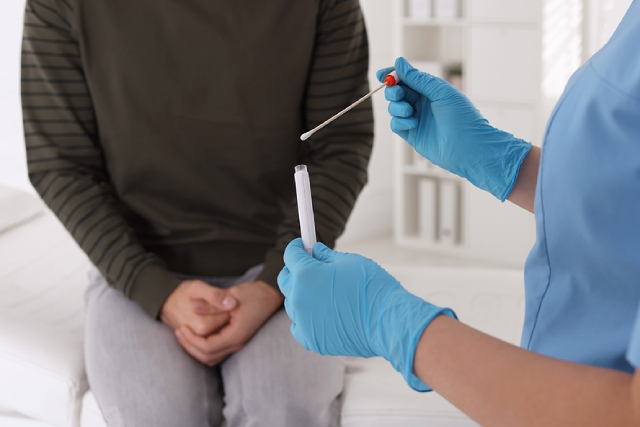
A standard STD screening typically involves a consultation with a doctor, a blood test, and sometimes a urine sample or swab depending on the infections being tested for. Common tests include checks for HIV, syphilis, gonorrhoea, chlamydia, and hepatitis B and C. Your doctor may recommend specific tests based on your sexual history and any symptoms you have noticed.
Results can take anywhere from the same day to a few days depending on the clinic and the tests involved. Some results, such as rapid HIV tests, are available within minutes.
There Is No “Right” Answer — Just the Right One for You
Every couple is different. Some will find it easy and even meaningful to go to the clinic together, turning it into a shared act of care. Others will feel more comfortable handling it independently and then comparing notes afterwards. Neither approach is more committed, more loving, or more mature than the other.
What matters is that both partners prioritise their health and are honest with each other about doing so. Regular testing is one of the simplest ways to protect each other, and making it a normal part of your healthcare routine, like a dental check-up or an annual physical, removes a lot of the emotional weight attached to it.
Ready to Get Tested?
If you and your partner are ready to take this step, the team at Elyon Family Clinic & Surgery is here to help. Whether you prefer to come in together or separately, we offer confidential, non-judgmental STD screening in a comfortable and professional environment. Our doctors are experienced in sexual health and can guide you through the right tests for your situation, answer any questions you have, and support you through your results.

