
HIV Self-Test Kits in Singapore: Are They Reliable? A Doctor Weighs In
Finding out your HIV status used to mean booking a clinic appointment, sitting in a waiting room, and hoping nobody you know walks past. For many people, that alone was reason enough to keep putting it off. Testing felt like a hurdle rather than a routine health check, and the longer it got delayed, the more anxiety built up around it.
That has started to change. Since early 2025, HIV self test kits have been available over the counter at selected pharmacies across Singapore, alongside outlets run by Action for AIDS (AfA). The move was designed to make testing easier to access, especially for people who have never been tested before. But a question naturally follows: can a test you do yourself at home really be trusted? We spoke to the reasoning behind the science, the local data, and what a doctor wants patients to understand before they rely on one.
What exactly is an HIV self-test kit?
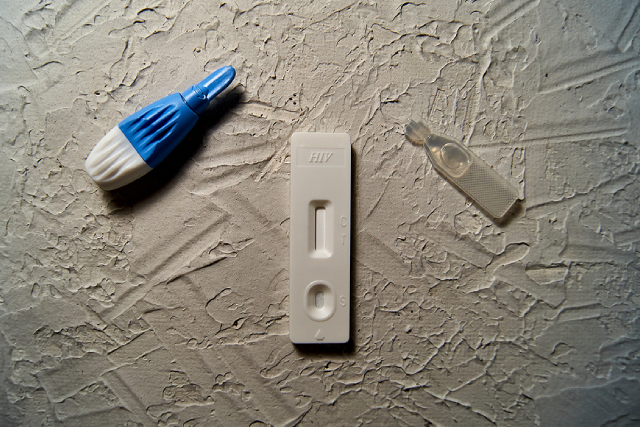
The kit sold in Singapore uses the OraQuick HIV Self-Test, an oral fluid-based rapid test. Rather than drawing blood, you swab your upper and lower gums and place the sample into a developer vial. A result appears within about 20 minutes, shown as either one line (negative) or two lines (reactive).
It is approved by Singapore’s Health Sciences Authority (HSA) and the US FDA, and is also a WHO pre-qualified rapid diagnostic test, according to the Ministry of Health. Kits are meant for adults aged 18 and above and cost roughly between $21 and $33, depending on where you buy them.
How accurate is it, really?
This is usually the first thing people ask, and it is a fair one. A Singapore-based study published in PLOS ONE, involving nearly 1,000 untrained participants, found that self-testing had a sensitivity of 97.4 per cent and a specificity of 99.9 per cent when compared against results read by trained healthcare workers. Put simply, the test correctly identified the vast majority of true positive and true negative cases, even among people who had never used a test kit before.
That said, no rapid test is a diagnostic tool on its own. The Ministry of Health is clear that a single self-test result, whether positive or negative, is not enough to confirm a diagnosis. A reactive result always needs to be followed up with confirmatory testing at a clinic. This is standard practice everywhere in the world, not a flaw unique to home testing.
Why the window period still matters
One thing a self-test kit cannot get around is the window period, which is the time between exposure to HIV and when the body has produced enough antibodies for a test to reliably detect them. For most rapid antibody tests, including the self-test kit, this window can stretch to around three months.
That means a negative result taken too soon after a risky exposure could be a false reassurance rather than an accurate one. If you have had recent unprotected sex or another high-risk exposure and test negative, doctors generally recommend repeating the test after the window period has passed, or seeing a doctor sooner for a more sensitive lab-based test such as a 4th generation antibody and antigen test.
Who tends to benefit most
Self-testing was never meant to replace clinic-based testing entirely. It was introduced to fill a gap, particularly for people who might otherwise avoid getting tested at all. Groups that tend to benefit include:
- First-time testers who feel more comfortable starting privately before speaking to a doctor
- People who want to test regularly between routine clinic visits, particularly those in higher-risk groups
- Couples who wish to test together before starting a new relationship
- Anyone who finds clinic settings intimidating or difficult to access due to time or location
According to the National Centre for Infectious Diseases, more than half of newly detected HIV cases in Singapore in recent years were only picked up at a late stage, when treatment is harder and outcomes are poorer. Wider access to self-testing is one attempt to catch infections earlier, when starting treatment makes the biggest difference.
What a doctor wants you to know
A positive result on a self-test kit is understandably frightening, but it is not a confirmed diagnosis. It simply means the next step is a proper clinical test, ideally as soon as possible, so that confirmatory results and a treatment plan can follow quickly if needed.
Doctors also point out that HIV laws in Singapore shape how results are handled once you step into a clinical setting, which is one more reason to follow up a reactive self-test with a doctor who can guide you through what happens next. A GP or sexual health clinic can also advise on post-exposure prophylaxis (PEP) if the exposure was recent, or pre-exposure prophylaxis (PrEP) for those who want ongoing protection.
It is also worth remembering that self-testing works best as one part of a broader approach to sexual health. Regular testing, open conversations with partners, and knowing when to seek medical advice all play a role, and a self-test kit is simply one convenient tool among several.
Making sense of a positive or unclear result
- A reactive result should always be followed up with a confirmatory blood test at a clinic
- An invalid or unclear result should be repeated with a new kit, or followed up with a doctor
- A negative result taken within the window period should be repeated after three months if there has been a recent exposure
- Pre- and post-test counselling is available through AfA and participating pharmacies if you need support interpreting a result
Reading a two-line result alone at home can feel overwhelming, and having a doctor to walk you through what comes next often makes a real difference to how manageable the situation feels.
Getting proper follow-up care
Self-test kits have made HIV testing considerably more accessible in Singapore, and the evidence backing their accuracy is reassuring. Still, a home test works best as a first step rather than a final answer. Whether your result was reactive, unclear, or simply left you with questions, speaking to a doctor is the way to get clarity and a proper plan going forward.
If you have taken a self-test and need confirmatory testing, or simply want discreet, professional advice on sexual health screening, PEP, or PrEP, the team at Elyon Family Clinic & Surgery is ready to help. Book a consultation with Elyon Family Clinic & Surgery today for confidential testing and guidance tailored to your situation.

